Ever had your crops or hay soaked overnight because your cover tore or leaked during heavy rain?
For many farmers, this frustration is all too real; a single weak tarpaulin can destroy months of hard work. Whether it’s protecting harvest, machinery, or livestock, the key lies in one often-overlooked factor: GSM and size.
Choosing the right GSM (grams per square meter) isn’t just about buying a thick sheet — it’s about understanding your farm’s needs, the local weather, and the usage purpose. A smart choice ensures maximum durability, waterproofing, and long-term savings.
Let’s break it down in simple, practical steps so you never pick the wrong tarpaulin again.
What Does GSM Mean in Tarpaulins?
GSM (grams per square meter) measures the density and thickness of a tarpaulin’s material.
In simple terms:
-
Lower GSM = Lighter, thinner, more flexible (ideal for temporary use).
-
Higher GSM = Thicker, stronger, long-lasting (perfect for heavy-duty, all-weather protection).
The higher the GSM, the greater the durability and resistance to tears, UV rays, and water.
Example:
-
100 GSM sheets might work for short-term shade or covering tools.
-
300 GSM tarpaulins are ideal for long-term protection of crops, hay, or equipment.
How GSM Affects Durability and Weather Protection
A good tarpaulin does more than cover; it protects your investment.
Here’s how GSM impacts your tarpaulin’s performance:
| Feature | Low GSM (80–150) | Medium GSM (200–250) | High GSM (300+) |
|---|---|---|---|
| Weight | Light | Moderate | Heavy-duty |
| Durability | Short-term | Seasonal | Long-lasting |
| UV Resistance | Low | Medium | High |
| Water Resistance | Moderate | Strong | 100% Waterproof |
| Best Use | Shade nets, nurseries | Crop covers, sheds | Haystack covers, heavy rainfall areas |
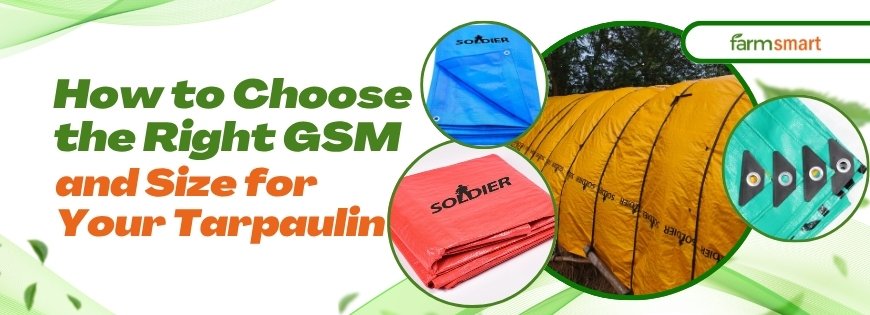
FarmSmart’s Soldier Tarpaulin, for instance, is built with UV-treated, waterproof HDPE material tested for Indian farms — ideal for long monsoon seasons and all-weather protection.
Choosing the Right GSM for Your Needs
Not every farm or business needs the same tarpaulin strength. The right GSM depends on how long and where you’ll use it.
For Crop Protection:
Use 150–250 GSM. Depending on the crops, protecting crops from heavy rain, wind, or harsh sun.
- Keeps moisture balanced
- Prevents soil erosion
For Hay and Machinery Storage:
Choose 200 GSM or above. These tarps handle continuous sun and rain exposure without cracking.
- Prevents moisture buildup and rust
- Long-term durability — lasts several seasons
For Livestock Shelters:
Go for 150–250 GSM. Thick enough to resist wear from animals and weather.
- Keeps sheds dry and shaded
- Reduces heat during summer
For Temporary Use or Transportation:
Use 100–150 GSM. Lightweight and flexible for quick coverage during transit.
- Easy to fold, tie, and store
- Cost-effective for short durations
How to Select the Right Size of Tarpaulin
Choosing the wrong size is another common mistake farmers make. A smaller cover may leave edges exposed, while an oversized one is hard to tie down and maintain.
- Measure before you buy. Use a measuring tape to get the full length, width, and height of the area you want to cover.
- Add an extra 1-2 feet margin for folding and tie-down purposes.
- Use reinforced eyelets for easy tightening and wind resistance.
Example:
-
For a 10×20 ft haystack, go for at least a 12×22 ft tarpaulin for secure tie-down
-
For a tractor or machinery cover, measure the full outline and allow extra coverage at the bottom.
Real-World Example: How Farmers Use Soldier Tarpaulin
Ramesh, a farmer from Karnataka, used to lose 10–15% of his stored hay every monsoon. After switching to Soldier Tarpaulin (300 GSM), he’s now able to reuse the same cover for over 3 years — with zero leakage or tearing.
💬 “I used to replace covers every season. Now, I don’t have to worry — Soldier Tarpaulin truly protects through every storm,” says Ramesh.
That’s what the right GSM + quality material can do for your farm.
Quick Tips For Buying the Best Tarpaulin
A tarpaulin is one of the most essential tools for farmers and outdoor users — protecting crops, produce, machinery, and materials from rain, sunlight, and dust. However, not all tarps are made the same. Here are some expert tips to help you choose the best and most durable tarpaulin for your needs.
1. Pick the Right Material: HDPE vs LDPE
Your first decision should be the type of plastic used.
HDPE (High-Density Polyethylene) tarpaulins are stronger, more durable, and ideal for long-term outdoor use, such as covering crops, greenhouses, or equipment.
LDPE (Low-Density Polyethylene) tarpaulins are softer and more flexible — better for temporary covers or indoor storage.
Tip: If your tarpaulin will face sunlight and rough use, always prefer HDPE.
2. Always Check for UV Treatment
Sunlight is the biggest enemy of plastic covers. A UV-treated tarpaulin resists damage from the sun’s rays and lasts much longer.
Properly UV-stabilized tarpaulins can last for years without fading or cracking. If UV protection isn’t mentioned on the label, it’s best to avoid that product.
3. Choose the Right GSM (Thickness)
GSM (grams per square meter) determines the thickness and strength of a tarpaulin. Heavier GSM means a thicker and more durable sheet.
After selecting the GSM, cross-check the weight of the tarpaulin to ensure you’re getting genuine material quality.
Weight Check Formula:
(Length in ft × Width in ft × GSM) / 100 / 108
Example:
An 18 × 30 ft tarpaulin with 170 GSM should weigh approximately 8.5 kg.
Always verify the weight at purchase — it’s the easiest way to detect low-quality or undersized products.
4. Check Tear Strength and Puncture Resistance
Your tarpaulin should be tough enough for your application. Whether you’re using it in a farm, warehouse, or transport vehicle, ensure it has good tear strength and puncture resistance. This helps it withstand strong winds, sharp edges, or heavy loads without tearing.
5. Inspect Lamination Quality
The lamination on both sides of the tarpaulin plays a key role in waterproofing and durability. A well-laminated tarpaulin stays waterproof, resists abrasion, and offers a smooth finish. Poor lamination, on the other hand, can peel off quickly and reduce the life of the tarp.
When purchasing a tarpaulin, always check:
- Material type (HDPE/LDPE)
- UV treatment
- GSM and weight
- Tear and puncture strength
- Lamination quality
A few simple checks can help you avoid poor-quality products and get a tarpaulin that lasts for years — saving you both time and money.
Conclusion: Pick Smart, Protect Strong
Selecting the right GSM and size is more than a buying decision; it’s a way to safeguard your hard work. A little awareness today can save thousands tomorrow.
Whether you’re covering crops, livestock, or machinery, FarmSmart’s Soldier Tarpaulin offers the durability, flexibility, and all-weather reliability your farm deserves.
Visit FarmSmart.in to explore high-performance tarpaulins designed for Indian farmers.