If you’re here, you’re likely facing one of these problems: sudden rains ruining stored grain, hay getting soggy under cheap plastic, machinery rusting in the yard, or construction materials losing value because the cover tore at the wrong time. You don’t want jargon—you want the right tarp that won’t fail when the weather turns, fits your budget, and lasts more than a season. This guide is written to solve exactly that.
Below, you’ll quickly learn the tarpaulin types that matter—HDPE, LDPE, and PVC—what each is best for, how they behave in real conditions (sun, wind, abrasion), and how to choose confidently for farming, construction, transport, or industrial use.
What Is a Tarpaulin and Why Does the Material Matter
A tarpaulin (tarp) is a tough, flexible sheet used to cover, protect, or contain. You’ll see tarps everywhere: on farms (crop stacks, hay, sheds), construction sites (cement, steel, scaffolding), transport (truck beds and side curtains), and industry (warehouse partitions, machinery covers, pond liners).
But performance varies dramatically by material. Pick the wrong one and you’ll fight tears, UV cracking, leaks, and constant replacements. Pick the right one and you’ll protect assets, reduce losses, and save time.
We’ll break down HDPE, LDPE, and PVC tarpaulins in plain language—what they’re made of, key properties, best uses, and pros/cons—then finish with a side-by-side comparison and a simple decision checklist.
HDPE Tarpaulins (High-Density Polyethylene)
What is HDPE?
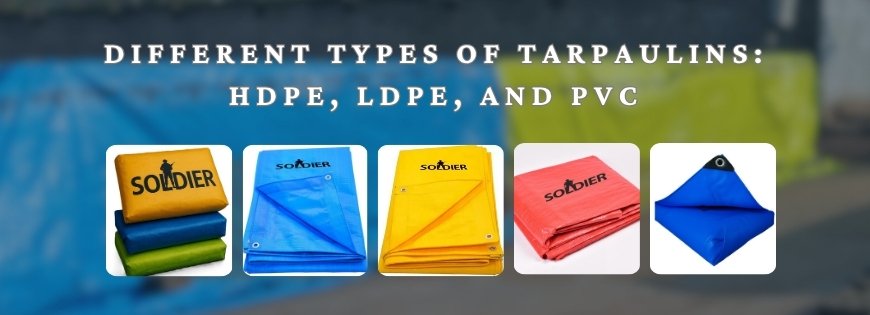
A woven HDPE fabric laminated with PE film (often LDPE/LLDPE) for waterproofing. The woven core gives high tensile and tear strength; the lamination adds water and UV resistance (when UV-treated).
Key Properties & Strengths
- High strength-to-weight; tough yet easy to handle and tie down
- Excellent waterproofing; commonly 100% waterproof when intact
- Good UV performance with UV treatment
- Resistant to many chemicals; low moisture absorption
Common Applications
- Agriculture: crop stacks, hay/fodder, temporary sheds, machinery covers
- Construction: material/scaffold covers, floor protection, temporary roofing
- Transport: truck/trailer covers; rural logistics
- General purpose: outdoor furniture/equipment covers, emergency shelters
Pros
- Rugged, value-for-money outdoor cover
- Available in many GSM/weights, sizes, and colors
- Repairable (patching), eyelets & reinforced hems are widely available
Cons
- Untreated/low-grade sheets can degrade under harsh sun
- Woven texture can snag on sharp edges if dragged
Best for: A reliable, all-round outdoor tarp for farms, construction, and transport where durability and cost balance matter.
LDPE Tarpaulins (Low-Density Polyethylene)
What is LDPE?
A non-woven LDPE film tarp. Softer, highly flexible, and typically lighter than HDPE. Great for wrapping and temporary coverage.
Key Properties & Strengths
- Very pliable; drapes around irregular shapes easily
- Good water barrier for short/medium durations
- Smooth surface, easy to clean; lightweight
Common Applications
- Short-term agricultural covers (nursery, light rain)
- Moisture barriers & liners (under concrete, ground sheets)
- Painting/renovation covers, dust protection, packaging/wrapping
- Event/emergency temporary sheeting
Pros
- Lowest initial cost for cover/lining tasks
- Superb flexibility for odd shapes and quick wraps
- Easy to wipe clean
Cons
- Lower tear strength than woven HDPE
- Shorter outdoor lifespan, especially under strong UV
- Not ideal for windy, high-tension tie-downs
Best for: Short-term or light-duty indoor/outdoor use where flexibility and low cost outweigh maximum toughness.
PVC Tarpaulins (Polyvinyl Chloride / Vinyl)
What is PVC?
A polyester fabric coated with PVC (vinyl). The result is a dense, heavy-duty tarp with exceptional waterproofing, abrasion resistance, and UV performance, suited for long-term outdoor and industrial conditions.
Key Properties & Strengths
- Very high tear/tensile strength; resists wind and abrasion
- Outstanding weather & UV resistance; stable for long outdoor use
- Flame-retardant grades available; good temperature tolerance
- Smooth, hygienic surface; easy to wash/wipe
Common Applications
- Truck side curtains & covers; highway logistics
- Industrial tents/canopies, warehouse partitions, marquees
- Pond liners, silage covers, water containment
- Construction enclosures needing a long service life
Pros
- Longest outdoor life among common tarp types
- Premium durability under harsh conditions
- Specialty options: fire-retardant, anti-fungal, food-grade
Cons
- Heavier & costlier than HDPE/LDPE
- Needs stronger tie-downs/handling due to weight
Best for: Heavy-duty, long-term outdoor/industrial applications where the best weather protection and lifespan are required.
| Factor | HDPE Tarpaulin | LDPE Tarpaulin | PVC Tarpaulin |
|---|---|---|---|
| Build | Woven HDPE + PE lamination | Non-woven LDPE film | Polyester fabric coated with PVC |
| Strength | High (woven) | Low–Medium | Very High |
| Flexibility | Medium (easy handling) | High (very pliable) | Medium (supple in higher grades) |
| Waterproofing | Excellent | Good | Excellent |
| UV Resistance | Good (UV-treated) | Moderate (short-term) | Excellent |
| Outdoor Lifespan | Good (seasonal to multi-season) | Short-term | Excellent (multi-year) |
| Weight | Light–Medium | Light | Medium–Heavy |
| Cost | ₹₹ (value) | ₹ (economy) | ₹₹₹ (premium) |
| Best For | Farms, construction, transport covers | Temporary wraps, liners, and painting | Trucks, tents, industrial, pond liners |
| Typical Drawback | Needs UV treatment; can snag | Tears are easier; UV aging | Heavier, higher price |
- Choose HDPE for a balanced, durable outdoor cover at a fair price.
- Choose LDPE for temporary, flexible wraps/liners.
- Choose PVC for long-term, heavy-duty weather protection.
Conclusion
If you’re leaning toward HDPE for outdoor, all-season use, Soldier Tarpaulin is a proven choice. It’s made from UV-treated HDPE, laminated for 100% waterproofing, and finished with reinforced hems and quality aluminum eyelets for secure tie-downs every meter. Farmers use it to protect crop stacks, hay, machinery, and temporary sheds, and transporters rely on it for truck-bed coverage through sun, wind, and heavy rain. In short: HDPE value with premium build, designed for India’s weather.